




Recycling symbol finder
Spotted a symbol and just want to know what to do? Find it below, then read on for the detail.
| Symbol | What it means | What to do |
|---|---|---|
 |
Mobius Loop — the material is technically recyclable. | Check it’s accepted locally; a number inside tells you the plastic type. |
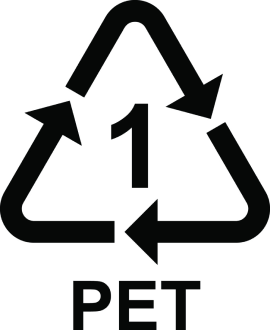 |
Resin code 1–7 — identifies the type of plastic. | See the resin code table — 1, 2 & 5 are widely recycled. |
 |
Seedling — industrially compostable (EN 13432). | Needs an industrial facility — don’t put in your home compost or recycling. |
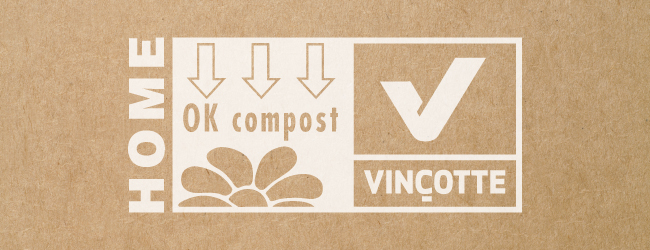 |
Home compostable — breaks down in a garden heap. | Add to your home compost bin. |
 |
Green Dot — a producer funding mark, not a recycling instruction. | Ignore for disposal; check other on-pack labels instead. |
The big change: ‘Recycle’ and ‘Do Not Recycle’ labels
The most important shift in UK recycling labelling is the move away from confusing, symbol-heavy packaging towards a simple, binary instruction: Recycle or Do Not Recycle. These are the On-Pack Recycling Label (OPRL) marks — the familiar “Recycle Now” swoosh — and they’re designed to tell a shopper, at a glance, exactly what to do.
The logic behind them is refreshingly clear:
- Recycle — 75% or more of UK local authorities collect this packaging through household recycling, and it’s genuinely sorted, processed and turned into new material.
- Do Not Recycle — fewer than 50% of councils collect it, and/or it can’t be effectively recycled in practice.
- Check Home Collections — a small “in-between” category for materials collected by 50–75% of authorities.
Simpler Recycling: what changed at the kerbside in 2026
From 31 March 2026, the government’s Simpler Recycling reforms standardised what English councils collect from households. For years, whether you could recycle something depended on your postcode — now a core set of materials is collected everywhere, which makes those on-pack labels far more reliable.
A few practical wins worth knowing:
- Food and drink cartons (like Tetra Pak) are now collected with mixed recycling — flatten them first.
- Metal and plastic tubes (empty toothpaste and tomato purée tubes) can now go in.
- More councils now take plastic pots, tubs, trays and foil consistently.
- Plastic films and flexibles follow separately, with mandatory kerbside collection extending across the UK from 2027.
Ready to make your packaging genuinely recyclable?
Explore our range of recyclable and sustainable packaging — from cardboard boxes to paper mailers — all designed to earn that ‘Recycle’ label.
Shop Sustainable Packaging →Recycling paper & cardboard
Paper and cardboard are the go-to for eco-conscious businesses — widely collected, widely recycled, and among the easiest materials to close the loop on. With demand rising, people increasingly want to know whether these materials are also biodegradable and compostable (most uncoated paper and card is), so clear labelling still pays off. Look out for the marks below.
The Mobius Loop — the universal recycling symbol
You’ve almost certainly seen this one — three chasing arrows forming a triangle. Known as the Mobius Loop, it signifies that a product can be recycled. What sits inside the loop tells you more: a number reveals the plastic type, and a percentage tells you how much recycled content the packaging contains.
Important nuance: the Mobius Loop means “technically recyclable,” not “accepted in your kerbside bin.” That’s exactly the gap the clearer OPRL labels are closing.
Plastic resin codes 1–7 explained
Inside the recycling triangle on plastics you’ll usually find a number from 1 to 7 with a letter abbreviation. This is the resin code — it identifies the plastic type so it can be sorted correctly. Here’s a quick-reference table you can scan before you bin.
| Code | Plastic | Common uses | Kerbside recyclable? |
|---|---|---|---|
| 1 — PET | Polyethylene Terephthalate | Drinks bottles, food trays | Widely — yes |
| 2 — HDPE | High-Density Polyethylene | Milk jugs, detergent bottles | Widely — yes |
| 3 — PVC | Polyvinyl Chloride | Pipes, vinyl products | Rarely |
| 4 — LDPE | Low-Density Polyethylene | Carrier bags, films, some containers | Store front-of-store / from 2027 |
| 5 — PP | Polypropylene | Yoghurt pots, bottle caps, tubs | Increasingly — yes |
| 6 — PS | Polystyrene | Foam trays, “styrofoam” | Rarely |
| 7 — Other | Mixed / other plastics | Multi-layer packs, bioplastics | Check locally |
Kerbside acceptance is improving under Simpler Recycling, but still varies by council — when in doubt, check the OPRL label or your local authority’s recycling tool.
The Mobius Loop with a percentage
When the loop contains a percentage, it tells you how much recycled content the packaging is made from — a great signal of genuinely more sustainable packaging, and a claim worth making prominently on your own products.
Compostable symbols: home vs industrial
Compostable packaging usually carries a seedling logo or the word “compostable.” But there’s a crucial distinction that trips up a lot of shoppers — and it’s where clear labelling really earns its keep.
Industrially compostable
Breaks down only under the controlled heat and conditions of an industrial composting facility — not your garden bin. Look for “OK Compost Industrial” and the European standard EN 13432 / 14955 seedling logo.
Home compostable
Designed to break down in a normal backyard compost heap. Often made from cornstarch, potato starch or sugarcane, and marked with a distinct home-compostable logo alongside or instead of the seedling.
Getting this label right matters: an industrially compostable item tossed into a home heap simply won’t break down, and a compostable item in the recycling stream is a contaminant. Clarity on-pack is everything.
Looking for compostable and plastic-free options?
Our eco range includes home-compostable mailers, paper tape and plastic-free void fill — clearly labelled so your customers know exactly what to do.
Browse eco packaging →Green Dot, Tidyman & other marks
The Green Dot
A common point of confusion. The Green Dot does not mean the packaging is recyclable, will be recycled, or contains recycled material. It’s a funding symbol, used mainly across Europe, showing the producer has contributed to the cost of packaging recovery and recycling schemes.
The Tidyman
A little figure binning litter. It has nothing to do with recycling — it’s simply a prompt to dispose of packaging responsibly rather than littering.
On-pack recycling instructions
Many items now carry short instructions (“Rinse,” “Cap on,” “Flatten,” “Remove sleeve”). Following them keeps material in the right stream and prevents contamination — small actions that make a genuine difference to what actually gets recycled.
What this means for your business
Whether you send a handful of parcels a day or a few thousand, your packaging is a direct line of communication with your customer. Clear, accurate recycling labelling does three things at once: it helps your packaging end up in the right place, it demonstrates a real commitment to sustainability, and — increasingly — it keeps you ahead of tightening regulation.
The direction of travel is obvious: simpler labels, more recyclable materials, and producers taking responsibility for what they put on the market. Choosing packaging that’s genuinely recyclable from the start — and communicating it clearly — is the single easiest win. For more on turning that into a brand asset, see our guide on how to brand your eco-friendly packaging.
Make your eco-friendly packaging speak to your customers
As a B Corp-certified supplier, we help thousands of UK businesses switch to packaging that’s recyclable, compostable or made from recycled content — and clearly labelled so it does its job.
Explore Sustainable Packaging →Recycling symbols: FAQs
What does the recycling symbol with a number mean?
The number (1–7) inside the triangle is a resin code identifying the type of plastic — for example, 1 is PET (drinks bottles) and 2 is HDPE (milk bottles). It tells sorting facilities what the item is made of, but it doesn’t guarantee your local council collects it kerbside.
Does the recycling symbol mean it’s actually recyclable?
Not necessarily. The Mobius Loop means a material is technically recyclable. The newer OPRL ‘Recycle’ / ‘Do Not Recycle’ labels are more useful, because they reflect whether UK councils actually collect and reprocess that packaging in practice.
What’s the difference between home and industrial compostable?
Home compostable packaging breaks down in a normal garden compost heap. Industrially compostable packaging (marked EN 13432) needs the controlled high-heat conditions of a commercial facility and won’t fully break down at home.
Is recycling labelling mandatory in the UK?
Standardised recycling labelling is set to become mandatory under EPR for packaging, but Defra has adjusted the timeline and the final requirements are still being confirmed. In the meantime, the voluntary OPRL ‘Recycle’ / ‘Do Not Recycle’ system is the recognised standard and the safest choice to adopt now.


