Every parcel you send is priced by size band — and getting yours wrong by even a few millimetres can cost you up to 39% more per item. Royal Mail splits its pricing into five categories — Letter, Large Letter, Small Parcel, Medium Parcel, and Large Parcel — and the cardboard box you pack in is the single biggest lever on what you pay. Choosing packaging built to hit each band is the fastest way to stop overpaying.
Quick reference: all Royal Mail size bands at a glance
All dimensions are maximum values. Measure your packed box — not the product alone.
The cheapest way to send anything — one stamp covers it.
Max length240mm
Max width165mm
Max depth5mm
Max weight100g
A letter can be sent with a single first or second class stamp — the most economical option Royal Mail offers. The item must also be flexible (able to bend), which rules out anything with rigid internal packaging.
💡
Saving tip: Fold A4 documents in half to fit a C5 envelope. As long as the packed envelope is no thicker than 5mm and under 100g, it qualifies as a standard letter — saving up to 34% versus Large Letter prices.
Recommended packaging
Standard envelopes up to C5 size. Documents, flat printed items, and thin flexible goods.
The sweet spot for ecommerce — think of it as a small parcel at letter prices.
Max length353mm
Max width250mm
Max depth25mm
Max weight750g
Don't be misled by the name — the 25mm depth and 750g weight limit means an enormous range of products qualify. Clothing, accessories, small electronics, cosmetics, books, and flat-packed goods can all be shipped as a Large Letter with the right packaging, saving up to 27% versus Small Parcel prices.
⚠
The depth limit is the one most commonly breached. Your box must be under 25mm including any air inside — so overfilling a borderline box is a common and expensive mistake. Always measure the packed item.
💡
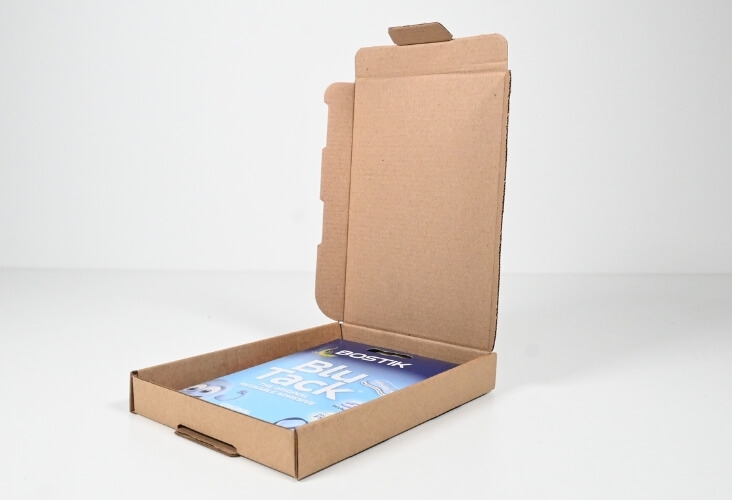
The letterbox advantage: Large Letter items that fit through a standard letterbox eliminate the need for a signature on delivery — improving delivery success rates and reducing failed delivery costs. Look for our letterbox-friendly boxes which are designed to meet this spec precisely.
Recommended packaging
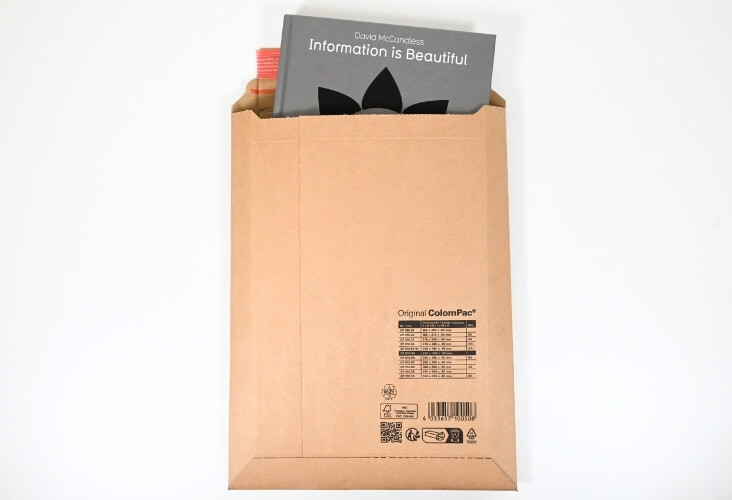
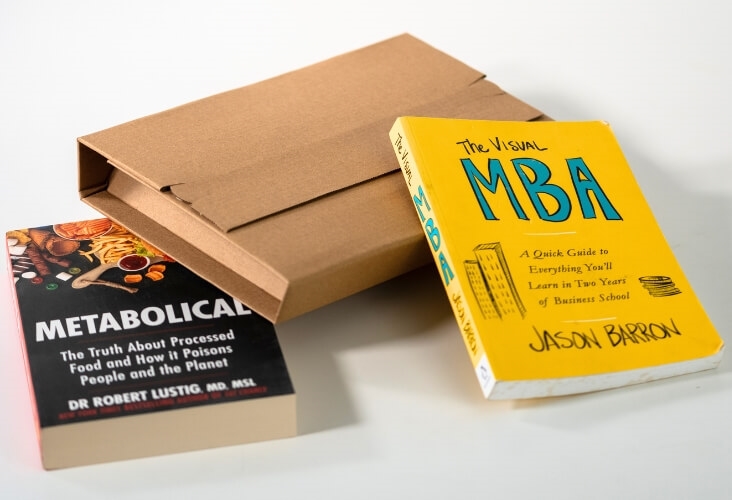
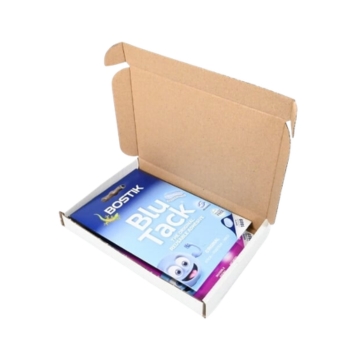
Slim postal boxes, letterbox boxes, board-backed envelopes, and book wrap mailers designed to maximise the 353 x 250 x 25mm allowance without exceeding it.
The workhorse of ecommerce despatch — the most widely used size band for UK online retailers.
Max length450mm
Max width350mm
Max depth160mm
Max weight2kg
Small Parcel covers the vast majority of everyday ecommerce goods. If you're currently despatching anything between 1kg and 2kg as a Medium Parcel, switching to Small Parcel packaging could save you around 39% on those items — a meaningful difference at any volume. For soft, non-fragile goods like clothing, mailing bags are often a lighter, cheaper alternative to a box within this band.
⚠
The 2kg weight limit is firm for standard services. If your item exceeds 2kg, it moves to Medium Parcel pricing — at which point it's worth comparing Royal Mail against courier rates, as couriers often offer better value above 1kg.
💡
Right-size to save: Sending a 0.8kg product in a box sized for a Medium Parcel moves you into a more expensive band. Choosing the smallest box your product fits in comfortably — with void fill to prevent movement — is the simplest way to stay in the cheapest applicable band.
Recommended packaging
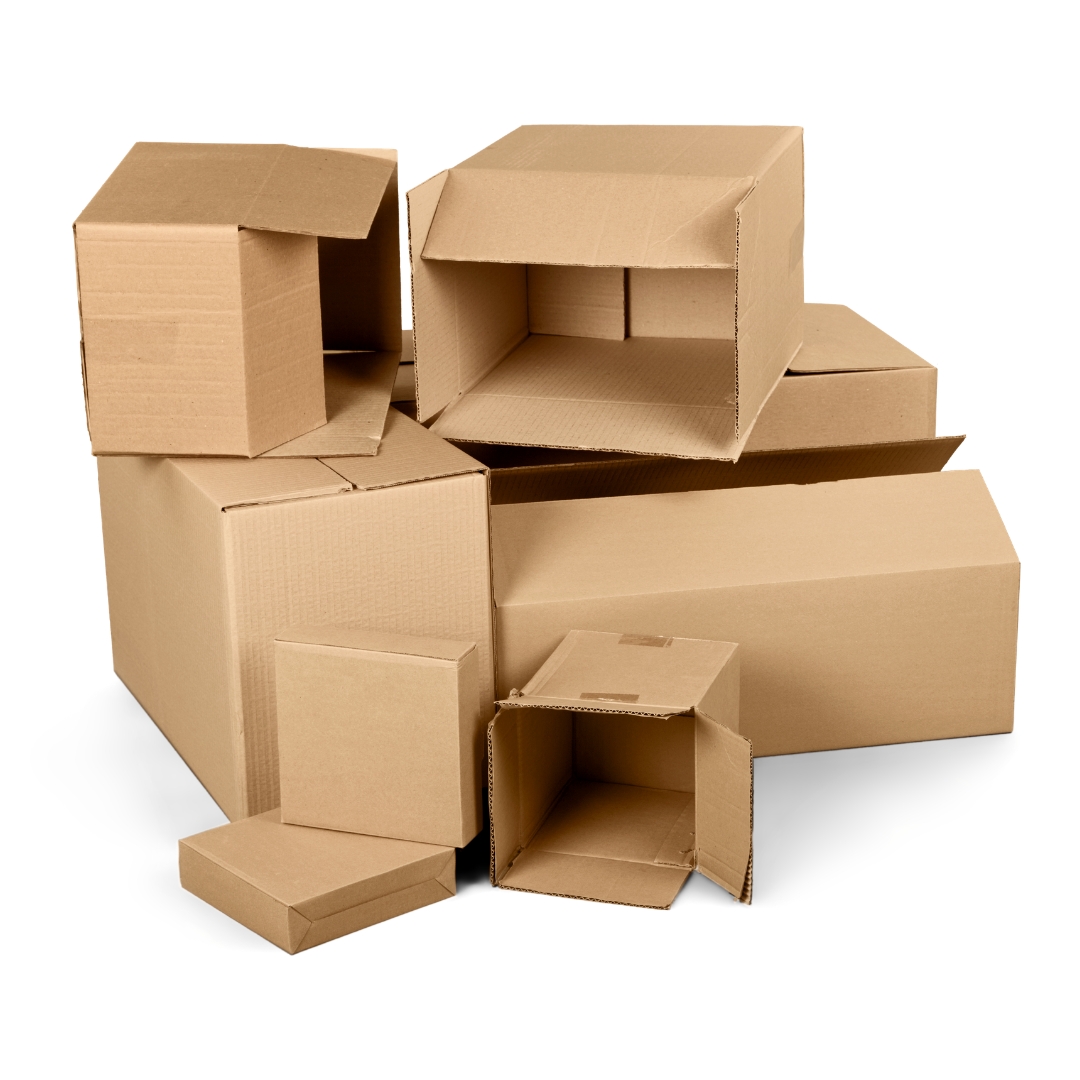
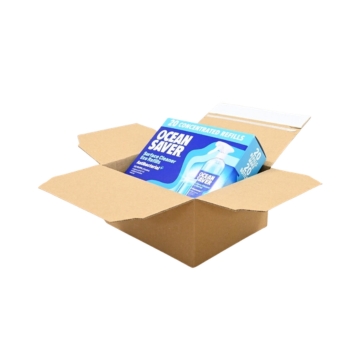
Standard single wall cardboard boxes are ideal for most Small Parcel items. Use double wall for anything heavy, fragile, or in the upper weight range. Postal boxes with peel-and-seal closures are worth considering for cleaner unboxing and faster packing.
For larger or heavier items that exceed the Small Parcel thresholds.
Max length610mm
Max width460mm
Max depth460mm
Max weight20kg
Medium Parcel covers everything that's too large or too heavy for the Small Parcel band, up to 20kg. It's the natural home for bulkier household goods, multi-item orders, and anything that doesn't fit in a standard despatch box.
💡
Compare courier rates above 1kg: Once you're past 1kg, courier services may offer better value than Royal Mail — especially at volume. Building a relationship based on monthly despatch volume and typical parcel weights is often how businesses unlock their best per-parcel rate. For high-volume operations, our team can help you think through the options.
Recommended packaging
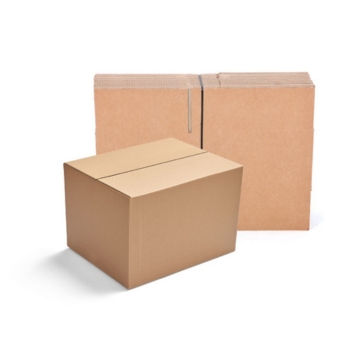
Double wall cardboard boxes for anything over 10kg or fragile, single wall for lighter items in this band. For regular high-volume Medium Parcel despatch, pop-up crash lock boxes speed up assembly without compromising on strength.
Handled by Parcelforce — or compare with other logistics providers for best value.
Max length1500mm
Max L+D combined3000mm
Max weight30kg
Anything exceeding Medium Parcel dimensions or over 20kg is classed as a Large Parcel and handled by Royal Mail's Parcelforce service. If you regularly despatch in this bracket, it's well worth comparing Parcelforce against other logistics providers — the market is competitive and negotiated rates are available at volume.
Recommended packaging
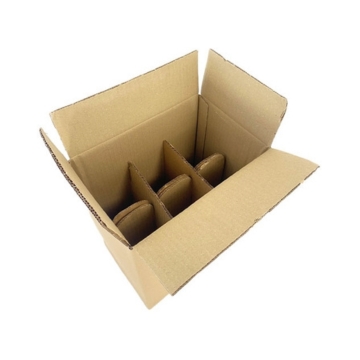
Double wall boxes for anything heavy or fragile. For specialist items, consider purpose-built packaging — we stock options for bottles, flowers, produce, and more.
These are the things that make the most difference in practice.
📒
Right-size your boxes
The most impactful change most businesses can make. A product shipped in a box that's one size band too large costs significantly more, every single time. Use our search by size tool to find boxes that fit precisely — or read our postal box guide for a deeper look.
🖥
Use Click & Drop for cheaper online rates
Buying postage online via Royal Mail's Click & Drop service is consistently cheaper than buying at the counter. It integrates directly with most ecommerce platforms, automates label printing, and gives you an audit trail. Read our Click & Drop guide to get set up.
📬
Maximise the letterbox opportunity
If your product fits within the Large Letter depth threshold and through a standard letterbox, you eliminate failed deliveries and the cost of redelivery attempts. Letterbox-friendly boxes are specifically designed to let you do this reliably at scale.
🚚
Compare couriers above 1kg
Once parcel weight exceeds 1kg, courier services often undercut Royal Mail on price — particularly if you're despatching at volume. Businesses that commit to regular volumes and typical parcel dimensions can usually negotiate meaningfully better rates than the headline prices suggest.
⚡
Speed up packing with crash lock boxes
Labour time is a real packaging cost. Pop-up crash lock boxes assemble in a single motion with no base taping — a meaningful time saving on high-volume packing lines, particularly during peak periods.
7. Postage labels: what you need to know
Getting labels right matters more than most businesses realise. The wrong size, poor print quality, or bad placement can cause mis-sorts and failed deliveries. Here's what to get right.
Standard label size
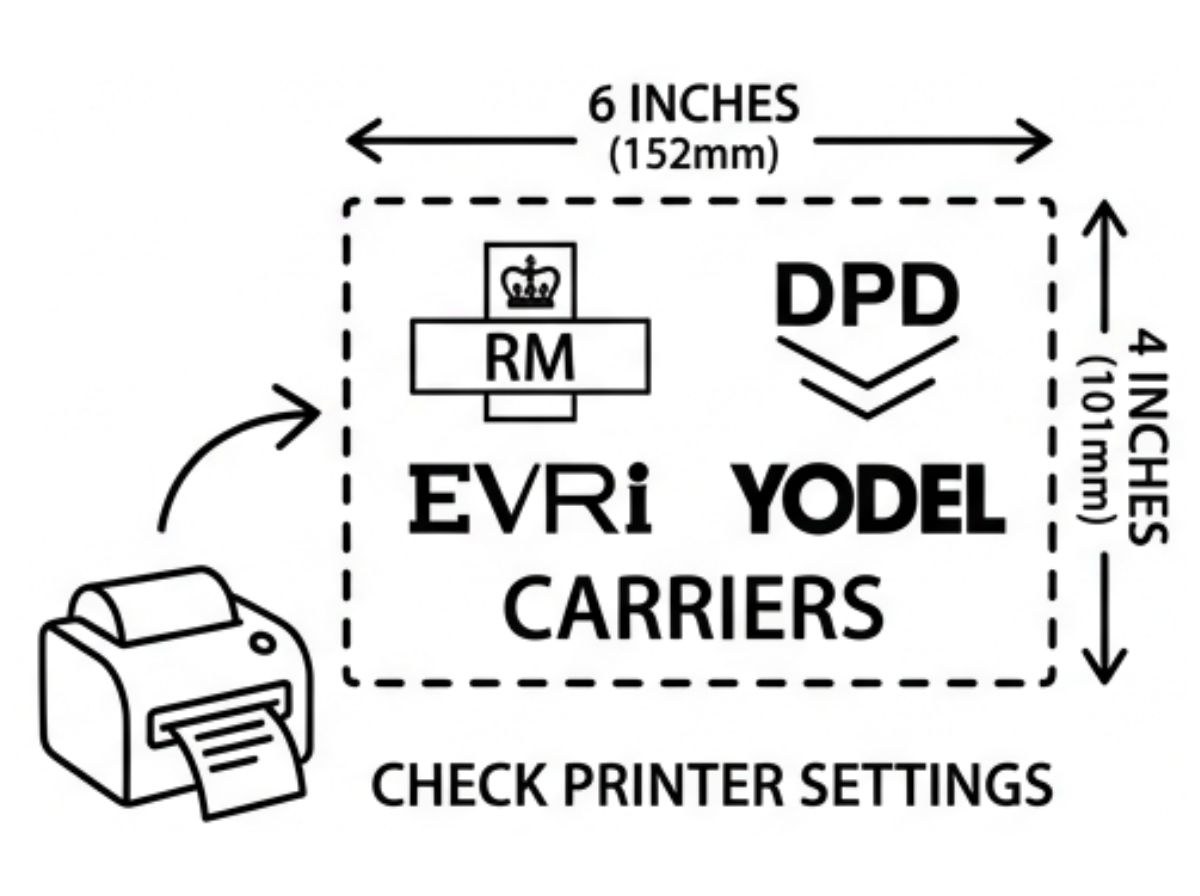
The UK standard for parcel despatch is 6″ x 4″ (152 x 101mm) — the format used by Royal Mail, DPD, Evri, Yodel and all major carriers. This is the size generated by Click & Drop and compatible with all direct thermal printers. Make sure your printer is set to this size before a packing run to avoid wasted stock.
What's on the label
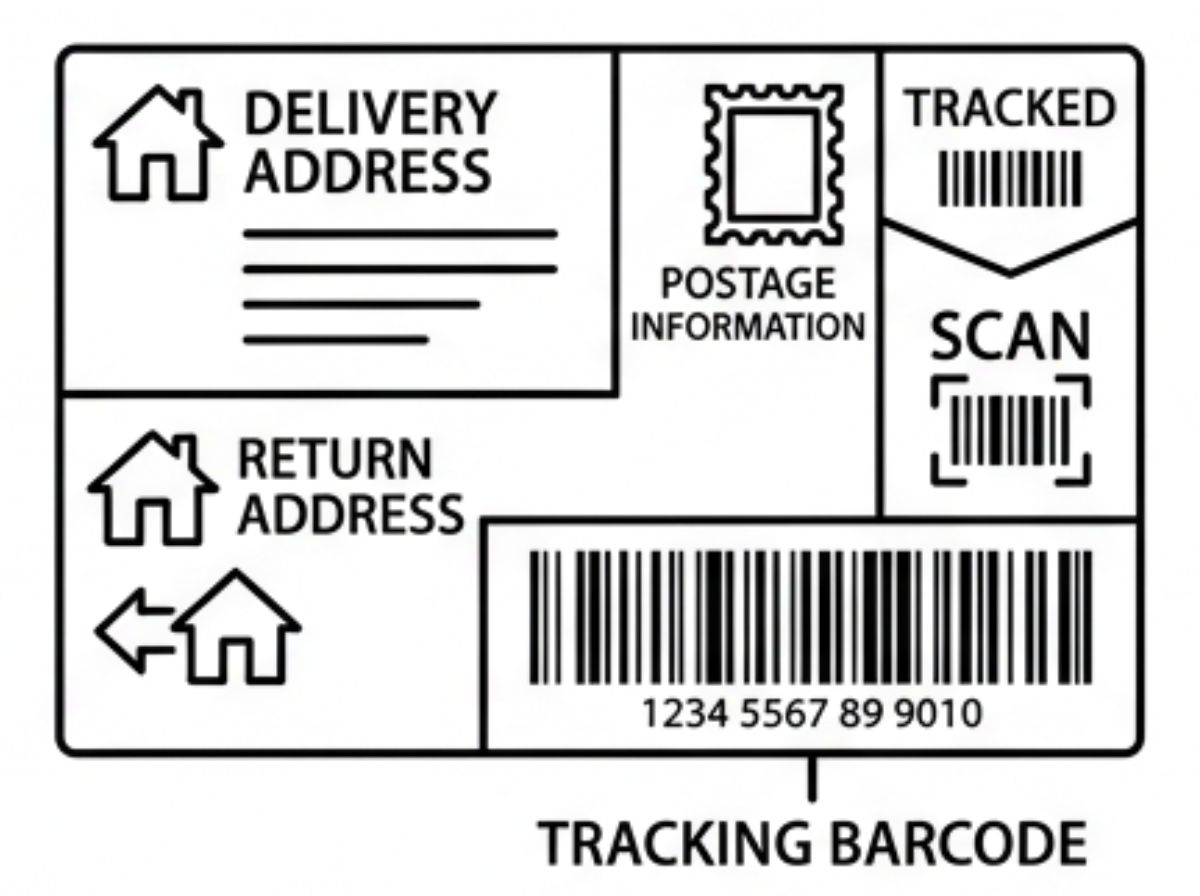
Every despatch label must include a delivery address, return address, tracking barcode, and postage information. Tracked services add an end-to-end scan barcode. Ensure both addresses are correct before printing — label corrections mid-run add time and waste.
Label quality
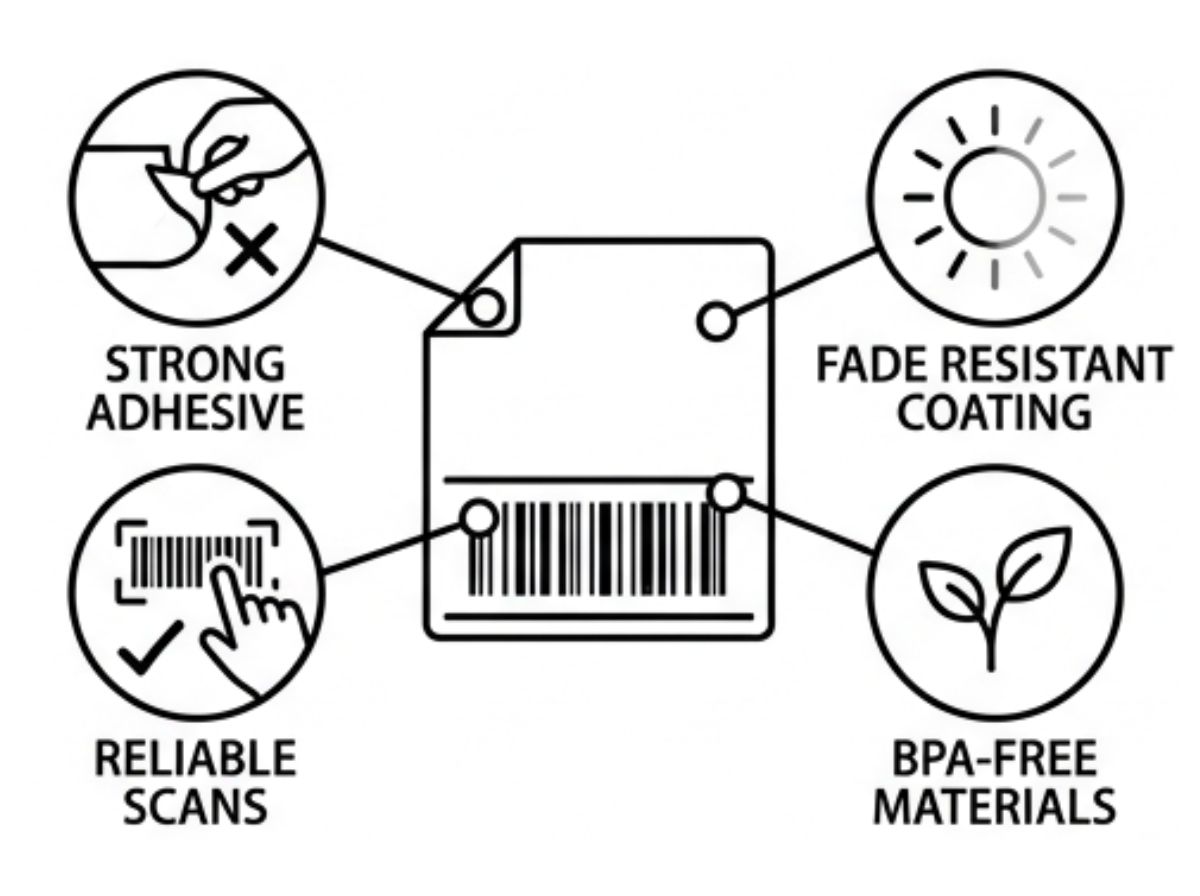
A label is only useful if its barcode scans reliably throughout the entire delivery journey. Look for a strong permanent adhesive, a good quality thermal coating that resists fading in transit, and BPA-free materials. Many low-cost imported labels fail on one or more of these points — a false economy when a mis-sort costs far more than the label saving.
Label placement
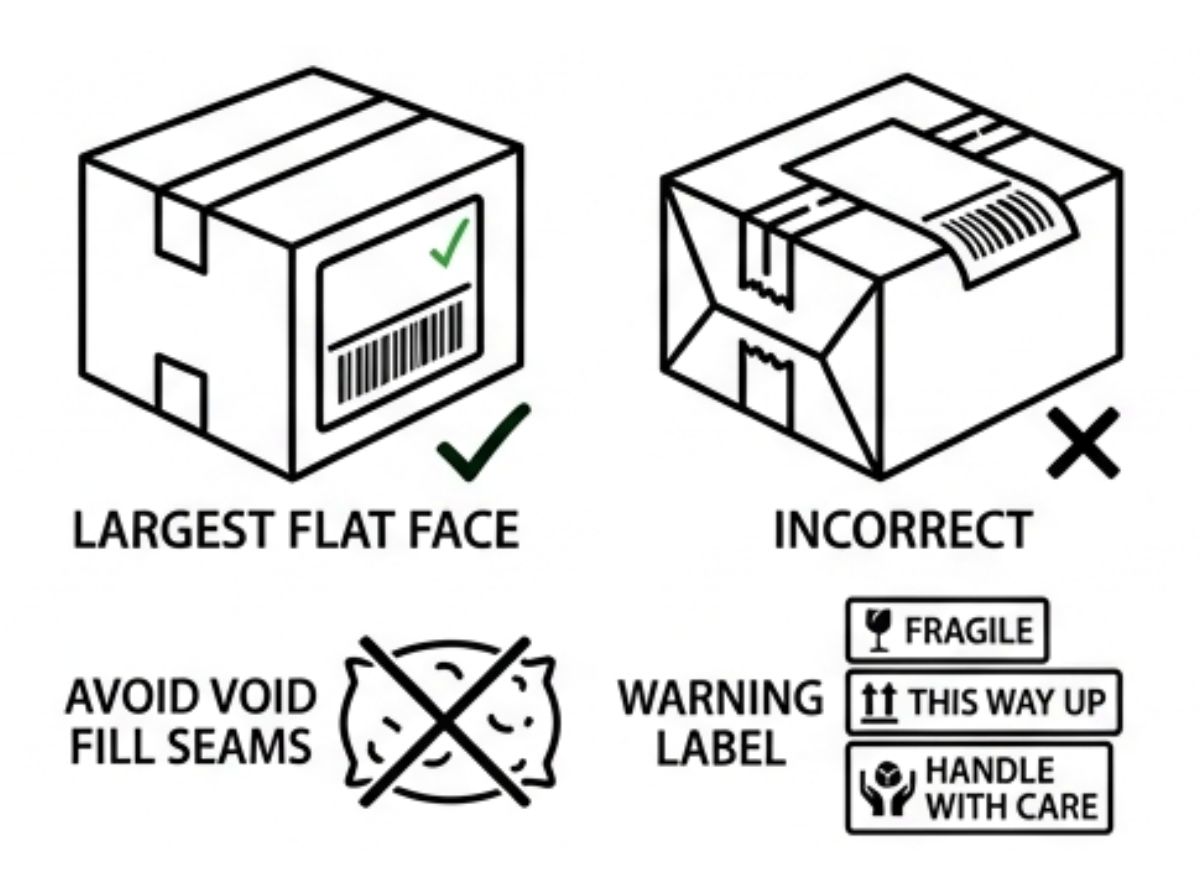
Apply labels to the largest flat face of the parcel, clear of seams, tape, and box edges. Avoid placing them over void fill seams where the surface may be uneven — poor adhesion is a common cause of mis-sorts. For fragile or high-value items, add Fragile, This Way Up, or Handle with Care warning labels alongside.
Royal Mail now charges for labels — from January 2026
Royal Mail began charging approximately £4.69 per roll for labels that were previously free to business customers. For any business printing at volume, sourcing your own stock independently is now the most cost-effective approach — and gives you more control over quality and supply. Read our full guide to the changes to understand what's affected and what to do about it.
Royal Mail's Click & Drop service lets you buy and print postage online — typically at a lower rate than over-the-counter prices. It integrates with most ecommerce platforms including Shopify, WooCommerce, eBay, and Amazon, automating label creation and despatch manifesting.
Read our step-by-step guide to getting set up and making the most of it.
We stock postal boxes, letterbox-friendly boxes, and single and double wall despatch boxes across every Royal Mail size band — all available for fast UK delivery, made from recycled and responsibly sourced materials.
As a certified B Corp, we care about getting this right — not just for your bottom line, but for the planet too.
The questions we hear most often — answered directly.
What happens if my parcel is slightly over the size or weight limit? +
Royal Mail operates an automated Revenue Protection system that detects size and weight discrepancies. If your item is found to fall into a higher band than declared, you will be charged a correction fee on top of the difference in postage — which can be significantly more than the original postage cost. There is no published tolerance. The practical advice is to always measure your packed item — including any air gap inside the box — and treat every limit as a hard ceiling, not a guideline.
Does Royal Mail measure the box or the contents? +
Royal Mail measures the outer packed dimensions of the item as presented — the box, envelope, or mailing bag including its contents and any void fill. A box that compresses down to 24mm but has air inside that makes it sit at 27mm will be treated as exceeding the Large Letter 25mm depth limit. Always measure after packing, with the box sealed and in its final sent state.
What is the difference between Large Letter and Small Parcel? +
The key difference is depth and weight. A Large Letter must be no larger than 353 x 250 x 25mm and no heavier than 750g. A Small Parcel can be up to 450 x 350 x 160mm and up to 2kg. The postage difference between the two is significant — getting a product into Large Letter rather than Small Parcel can save around 27% per item. The depth limit (25mm) is the boundary most commonly breached by accident, so it is the one worth watching most carefully.
Can I send a rigid item as a Large Letter? +
Yes — the flexibility requirement applies to the Letter format only. Large Letters, Small Parcels, and above can contain rigid items. This is a common point of confusion: many sellers assume their rigid product can't qualify as a Large Letter when in fact the only constraints are the 353 x 250 x 25mm dimensions and 750g weight limit. A small book, a phone case, a flat-packed cosmetic item — all can qualify if they fit within those limits.
Is Royal Mail cheaper than couriers for small parcels? +
For items under 1kg, Royal Mail is generally the most cost-effective option for UK domestic delivery. Above 1kg, courier services often become competitive — particularly at volume where negotiated rates apply. For anything above 2kg (which falls into Medium Parcel territory), it is always worth comparing Royal Mail against DPD, Evri, and Yodel, as the pricing gap can be significant. The crossover point varies by volume and carrier relationship, but 1kg is a reliable rule of thumb for when to start checking alternatives.
What size box do I need for Royal Mail Small Parcel? +
Your packed box must be no larger than 450 x 350 x 160mm and no heavier than 2kg to qualify as a Small Parcel. The ideal box is the smallest one your product fits in with appropriate void fill to prevent movement — oversizing costs money both in postage (if it tips into Medium Parcel) and in wasted packaging material. Use our search by size tool to find the closest match to your product dimensions.
Does the box itself count towards the weight limit? +
Yes. Royal Mail weighs the entire parcel as presented — box, void fill, product, and tape included. This catches out many sellers who weigh the product alone. A standard single wall cardboard box for a Small Parcel typically adds 200–400g depending on size. Always weigh after packing, and if you're regularly close to a weight threshold, choose a lighter box construction to preserve margin.
Can I use any cardboard box for Royal Mail, or does it need to be a postal box? +
Royal Mail does not require you to use a specific type of box — any well-sealed cardboard box that meets the size and weight limits for the service you're using is acceptable. That said, postal boxes are worth considering for regular despatch operations: they're sized to hit specific Royal Mail bands, often include peel-and-seal closures for faster packing, and are made from appropriate board grades for the transit stresses involved. A used or repurposed box is fine for occasional sending but not ideal for volume operations.
What is the cheapest way to send a parcel with Royal Mail? +
The cheapest approach combines three things: getting into the lowest applicable size band (so a Large Letter rather than Small Parcel wherever possible), buying postage online via Click & Drop rather than at the counter (consistently lower rates), and using the slowest appropriate service (2nd Class rather than 1st Class where delivery timing allows). For volume operations, an Online Business Account (OBA) unlocks further discounts.
How do I know which Royal Mail size band my parcel falls into? +
Measure your packed item at its widest, longest, and deepest points — then check all three dimensions and the weight against the band limits in the quick reference table above. Your parcel must satisfy all four criteria (length, width, depth, and weight) to qualify for a given band. If any single measurement exceeds the limit, the whole item moves into the next band up. When in doubt, use the quick reference table at the top of this page — or use Royal Mail's online Price Finder at royalmail.com for a definitive answer.
Size and weight specifications sourced from Royal Mail's official size and weight guide. Pricing bands subject to change — always verify current rates at royalmail.com before committing to a packaging specification. Last reviewed March 2026.
Sign up to our newsletter to receive our updates
Join the Priory Direct "Sustainability Matters" newsletter for the latest eco-friendly news, inspiring success stories, expert insights, and practical tips to be a part of positive change. Subscribe now and make sustainability matter!