





Bamboo clothing came to Priory Direct on a mission to minimise their impact on the environment through sustainable packaging.
About Bamboo Clothing
Bamboo Clothing is a pioneering brand that has captured the essence of sustainable fashion. With their vision to transform the way we dress and impact our planet positively; Bamboo Clothing is dedicated to revolutionising the apparel industry as an eco- conscious brand. Embracing the versatility and sustainability of bamboo fibres, they have created a unique niche by crafting high-quality clothing through using a fast-growing crop that uses less water than cotton and absorbs five times more carbon than hardwood trees.
Their commitment to sustainability goes beyond their choice of materials; it permeates every aspect of their business, from ethical sourcing to eco-friendly production processes. The brand stands tall as a beacon of environmental responsibility, offering consumers a compelling choice to support fashion that aligns with their values.

Bamboo Benefits
Bamboo is a great sustainable source of material for clothing, it releases 35% more oxygen, only needs 1/3 of the amount of water, and absorbs 5 times more carbon than hardwood trees.
Our Approach - 6 Pillars of Sustainable Packaging
These six pillars of sustainable packaging encompass our comprehensive approach towards sustainable and environmentally responsible packaging solutions, vital for businesses to minimize their impact and align with conscious consumer demands. Sustainable packaging should be:
1. Right Sized & Courier Optimised
Minimise addition bulk and weight added to despatches, be easy to pack and handle, minimise wasted space in the supply chain.
2. Sustainably Sourced
Sourced from sustainable & regenerative sources such as FSC-approved sustainable forests.
3 Recyclable & Reusable
Be curbside recyclable and where possible reusable such as mailing bags with dual seal for returns.
4. Low Emissions - Cradle to Grave
Carefully designed to minimise carbon emissions throughout their life cycle and this should be assessed in a science-based way.
5. Ethically Made
Made as close to their point of use as possible in well- supported ethical work environments. Such as mailing bags which we manufacture in the UK and Europe.
6. Non-Harmful
Designed to minimise harm after use, like paper mailing bags which biodegrade naturally with minimal acidification, eutrophication and PCOP potential.
The Science - Paper vs Poly
LCA REPORT COMMISSION - RESEARCH INSTITUTES OF SWEDEN (RI.SE)
We took a science-based approach with independent research conducted by the Research Institutes of Sweden (RI.SE).
RISE is an independent, state-owned research institute. As an innovation partner for the entire society, they help develop technologies, products, services and processes contributing to a sustainable world and competitive industry.
On a scientific basis, they help customers and partners adapt to and meet challenges, take a holistic approach to solving complex issues and strengthen their competitiveness. Their offering is based on expertise, often in combination with unique test and demonstration environments and advanced lab instruments.

This report conducts a full lifecycle assessment across 4 core areas, evaluating the environmental impact of Paper Mailing Bags versus virgin plastic mailing bags and 100% recycled plastic mailing bags.
Global Warming Potential
Global warming potential is described as the potential to contribute to climate impact based on releases of greenhouse gases, considering each chemical's radioactive forcing and lifetime.
The results:
49% reduction in carbon footprint vs 40-micron virgin poly mailers
23% reduction in carbon footprint vs 40-micron 100% recycled poly mailers
Biogenic emissions actually result in paper mailing bags showing a negative carbon footprint of -46.7kg/CO versus plastic bags being a net contributor of CO of +54.8kg/CO.

Eutrophication Potential
The potential to cause impacts due to excessive levels of macronutrients in the environment caused by emissions of nutrients to air, water and soil.
The results:
74% improvement of unbleached kraft mailers versus 100% recycled content PE mailer bags
50% improvement of unbleached kraft paper mailers versus virgin PE mailer bags
Acidification Potential
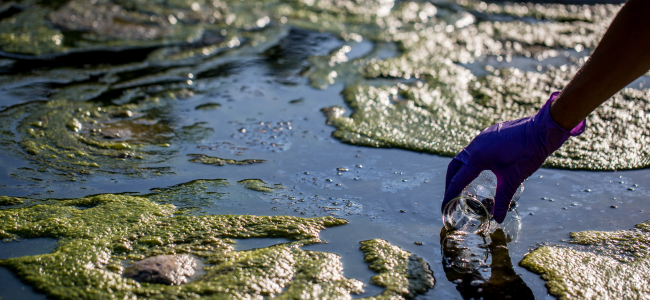
The potential of a product or activity to cause a wide range of impacts on soil, groundwater, surface water, organisms, ecosystems and materials through the release of acidifying substances into the environment.
The results:
32% lower of unbleached kraft mailer than virgin PE Mailing Bag

Photochemical Ozone Creation Potential (POCP)
The potential to cause photooxidant formation through certain pollutant exposure to sunlight; photo-oxidants are reactive substances (mainly ozone) emitted by some vehicles, which are injurious to human health and ecosystems and may damage crops.
The results:
27% improvement of unbleached kraft mailer bags versus 40- micron virgin PE mailers

Recyclability
What many people do not realise is the limited recycling capacity in the UK for certain materials, in particular LDPE soft plastics. As a result, it becomes imperative for businesses to conscientiously consider their packaging materials choices.
Soft Plastic Recycling
There is a large gap in soft plastics recycling capacity versus usage with the UK having less than 1/3 the capacity needed to recycle LDPE and a huge lack of recycling capacity for consumer LDPE.
.png)
Over 95% of soft plastics generated by e-commerce businesses for consumers will end up in landfill or the open environment causing significant environmental harm and downstream microplastics. Choosing paper over LDPE helps divert more waste from landfills, reducing the burden on limited landfill space.
Paper Recycling
Contrasted with LDPE is paper recycling adoption and capacity in the UK and Europe.
Paper is one of the most widely recycled materials in the UK. The recycling infrastructure for paper is well- established and much more accessible leading to excellent recycling rates especially when compared to LDPE soft plastics.
Curbside collection for paper is a widespread and commonplace practice throughout the UK, making it an integral part of the waste management infrastructure and a reliably adopted consumer behaviour.
Each tonne of recycled paper saves 380 gallons of water and 3m3 of landfill space.
The Outcome - A Success for Bamboo Clothing, Their Customers, And the Planet
Off the back of this scientific assessment and some operational testing, Bamboo clothing decided to buck the trend of single-use plastic packaging within the apparel sector and set the sustainability standard by migrating to Priory Elements Paper Mailing Bags.

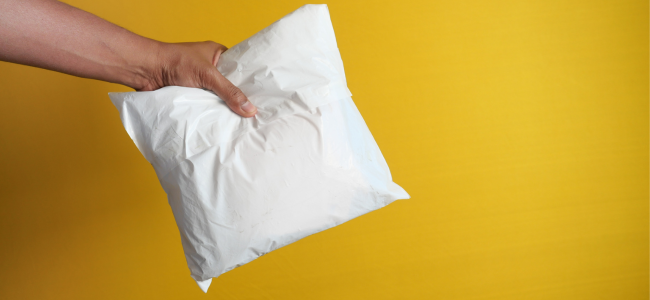
Crafted entirely from paper, biodegradable, fully recyclable, and lower carbon, these bags provide a planet-friendly alternative to traditional polythene mailers. Featuring strong block bottoms, gusseted sides, paper-cut-proof edges, and peel & seal closure they perform brilliantly in the packing environment. Priory Elements Paper Mailing Bags are also printed with eco-markers and each size features an endangered animal to raise awareness of key issues and communicate the planet-friendly packaging choice that the retailer has made for sending their items.

The transition from poly mailers to Priory Elements Paper Mailing Bags has been a game-changer for Bamboo Clothing. The migration was seamless, demonstrating excellent packing efficiency and handling, outstanding customer feedback, and delivering a substantial positive impact. The migration has saved 8.37 tonnes of single-use plastic in its first year and reduced Bamboo clothing’s packaging’s carbon footprint by 49%. Customer feedback has been outstanding with satisfaction around Bamboo clothing’s packaging choice now a regular feature in their customer reviews. In addition to all that 1% of all the spending has gone to 1% for the Planet supporting planet-saving charities – we’re immensely proud of this collaboration and of Bamboo Clothing’s choice to migrate to planet-friendly packaging.
.png)


