






The size of our carbon footprints play a key role in the fight against climate change and global warming, and it was recently proven that we need to act quickly to reduce it.
In order for us to have a handle on global warming, and limiting it to just a 1.5C rise over this century, we need to cut annual CO2 emissions by around half by 2030.
When COVID-19 really took hold of the world in March 2020, it forced all of us to stop, preventing us from going about our lives as we’d always known them. Whilst this caused so much uncertainty for our daily routines, it was actually a glimpse of what life could be like if the environment got what it has been crying out for: respite.
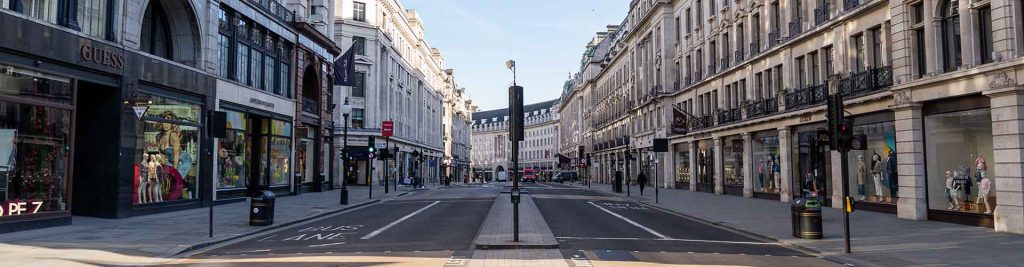
Unnecessary car journeys were forbidden, foreign holidays and air travel were extremely limited, and all non-essential physical retail stores were forced to close for months on end, all of which are carbon emitting activities we usually do without a second thought.
So, with that in mind, how did our forced behaviour changes as a result of ‘stay at home’ enforcements impact the planet? Was the dramatic increase in online shoppers a blessing in disguise for the future of retail and its carbon emissions, or did the demand for home deliveries cause more environmental damage than we realised? Let’s take a closer look:
What impact did restrictions have on CO2 emissions?
Before we get into this bit, let’s cover off something important first:
CO2 emissions are cumulative; so emissions can go down in a given year, but overall atmospheric levels of CO2 will still go up because of our activity in the past. Indeed, around 20% of the CO2 we emit today will still be in the atmosphere in one thousand years’ time – it’s safe to say we’ll certainly have a lasting impact.
When most of the world had restrictions in place back in April 2020, global CO2 emissions dramatically reduced by around 17%.
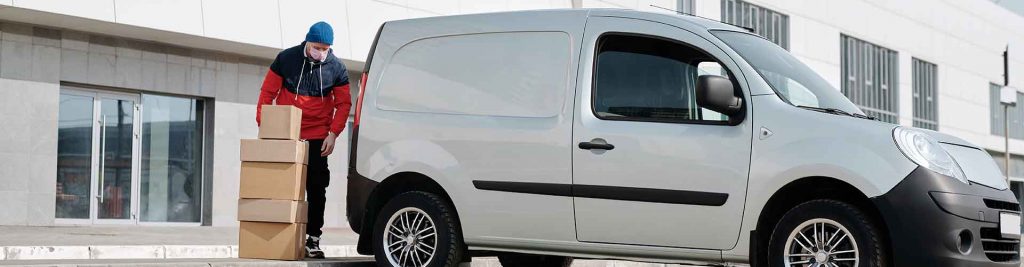
So what can we learn from this? Global emissions dropped by nearly a fifth, and in this time, we saw a near 64% increase in internet sales as a percentage of total retail sales compared to April 2019. Past studies conducted by Carnegie Mellon University around whether ecommerce was better for the environment in comparison to physical retail stores suggested that “Overall, e-commerce had about 30% lower energy consumption and CO2 emissions compared to traditional retail.“[1] And it seems that even now, with this exceptional growth in the ecommerce sector, and with all of the deliveries online shopping entails, ecommerce, still has a smaller carbon footprint compared to physical retail stores – particularly with the rise in sustainable packaging solutions being used by more and more businesses. Think about it – one delivery van instead of hundreds of individual car journeys, potentially to hundreds of different shops. And as more and more delivery vans are becoming electric or hybrid, as well as the UK’s third largest delivery company, DPD, offsetting the carbon emissions from their deliveries, more consumers converting to online shopping could actually be a very straightforward answer for minimising the environmental impact of retail activity.
A 17% reduction in carbon emissions is the type of change we need to be seeing to have a chance of limiting global warming, however, we can’t rely on a global pandemic and governments being forced to shut down their countries as a solution to reducing carbon emissions – it needs to be done sustainably through change of infrastructure if we want to see a long-term impact and difference.
Is the drop in emissions set to continue?
As other countries were starting to enjoy post-pandemic life, old habits soon returned, and carbon emissions began creeping back up, and even overtaking previous years statistics in some nations.
Indeed, as China was where coronavirus originated and the nation was locked down very quickly, the infection rates were minimal within a few months, so life is fairly normal there now, but old habits have returned, and are in overdrive.
China’s CO2 emissions increased 4-5% year on year in the months after they lifted their nationwide lockdown – a pattern we could easily see replicated around the world when the time comes to ease restrictions.
It’s actually likely that the rebound emissions will be larger than the decline as we all rush to rediscover our freedom, and without a change of attitude or infrastructure, it’s only a matter of time before we see the increase reflected in this year’s data.
Is it all doom and gloom?
Perhaps this pandemic has opened the possibility for the change of infrastructure and investment at the top level – after all, more of us have spent more time outside, albeit in our back gardens and local areas, and have a fresh appreciation for the planet and nature. Awareness around sustainability, caring about the environment, and the importance of limiting climate change is at an all time high. And that change in outlook is being reflected as we’ve seen more and more businesses prioritising genuine sustainability in their journey instead of just ticking a box and looking good on the CSR agenda. It’s showing in wider data too; coal demand is down, and the overall share of global energy spending on clean technologies (such as renewables, efficiency, and CCS) increased from 33% to 40%.
The UK reported its fastest drop in carbon emissions in nearly a century, and are almost halfway towards the target of reducing emissions to net zero by 2050. And just under a month ago, a £1bn plan was announced by the government to cut industrial carbon emissions by two-thirds within 15 years. So change in infrastructure is coming, and whilst it’s part of a longer term plan, we should see some benefits of it by 2030 to help limit climate change.
There’s certainly some elements of lockdown life which, if implemented on a longer term scale, would be hugely beneficial to the environment and our targets around minimising carbon emissions, and more consumers adopting and sticking to ecommerce is certainly the lowest friction place to begin.
Has the pandemic changed the way you think about and act towards the environment? Will you keep new habits or go back to old ways once some normality has resumed? Let us know in the comments below!
Sources & References
[1] https://www.cmu.edu/news/archive/2009/March/march3_onlineshopping.shtml
https://eciu.net/analysis/briefings/international-perspectives/covid-19-climate
https://news.sky.com/story/covid-19-britains-greenhouse-gas-emissions-dropped-9-in-2020-12256220
https://www.bbc.co.uk/news/business-56426928


