






In only 208 days, humanity has exceeded nature’s budget for the year.
Earth Overshoot Day Meaning:
Earth Overshoot Day 2022 falls on July 28th, being one of the earliest overshoot days in history. It marks the date when we have used all the biological resources that Earth regenerates during the entire year. This means that for the rest of the year we are taking away resources from future generations, which will eventually leave the world short; we are effectively in debt to the planet.
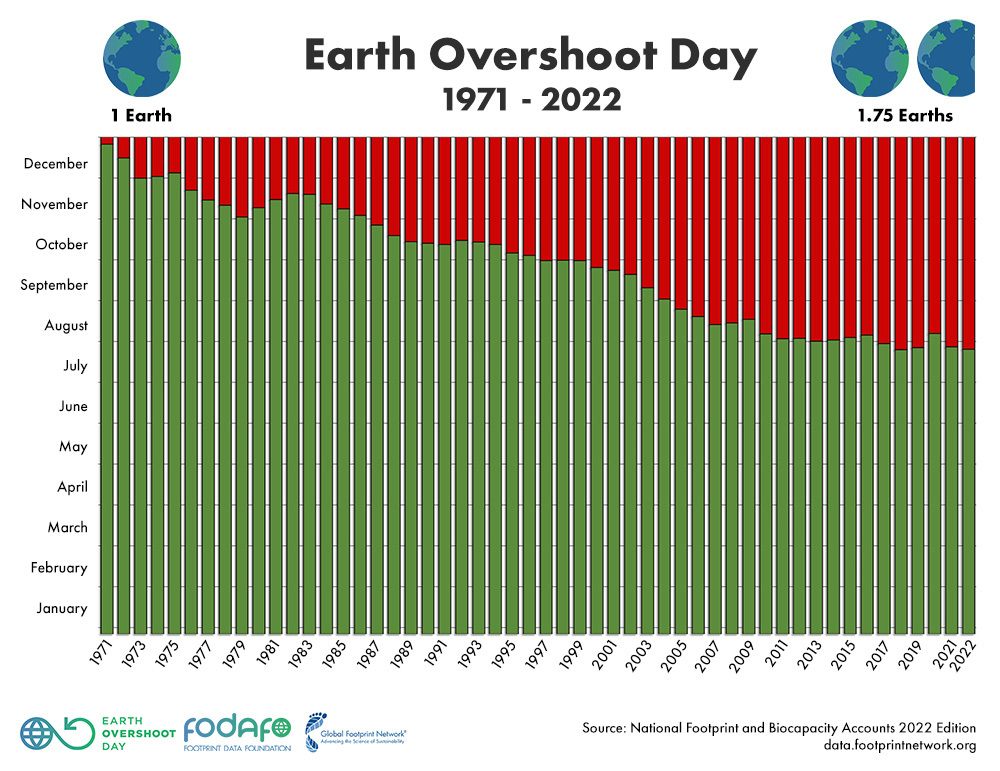
This date can change every year. When the environmental research organisation – Global Footprint Network, started conducting this annual assessment in 2006 the overshoot day was August 21st. Since then, it has been rapidly declining, with overshoot days being brought over three weeks forward in such a small space of time. Although in 2020, overshoot day was pushed as far back as August 22nd. A significant drop in consumption was recorded in the first half of the year due to the pandemic-induced lockdowns, which meant for the first time ever an overshoot day was delayed.
How is Overshoot Day Calculated?
To determine the date for Earth Overshoot Day, the Global Footprint Network collects 15,000 data points per country every year, then calculates the Footprints of more than 200 countries, territories, and regions. This then allows them to compare the number of days that the Earth’s biocapacity can sustain to humanity’s ecological footprint, thus calculating the global overshoot of days that are remaining.
However the direct consequences of ecological overspending result in food shortages, species extinction, deforestation, desertification, and the buildup of carbon concentration in the atmosphere.
But did you know that it’s actually different for each country?
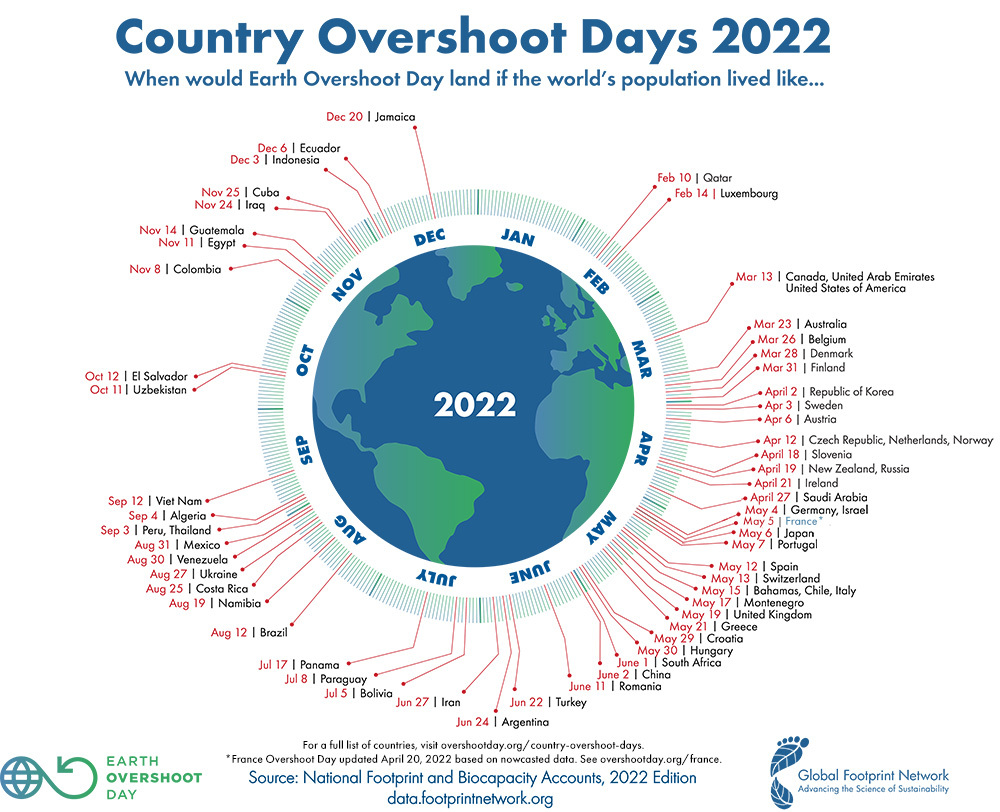
Countries use different resources at different rates. For example, if all of humanity consumed like the USA then Earth Overshoot Day would land on March 13th, whereas if we consumed like Jamaica then it would fall on December 20th.
In the UK, we consume enough resources for overshoot day to land on the 19th of May.
Why is Overshoot Day Getting Earlier Each Year?
There is a phenomenon of emission rises and biodiversity loss happening at a constant rate. Unfortunately, it’s predicted that it’s set to continue with natural world resources depleting by 2040. From July 28th we are operating on ecological deficit spending, with the usage of around 1.7 earths every year – meaning we would need that amount to make our consumption sustainable.
What Can We Do to Move the Date?
We know that the last few paragraphs have been very doom and gloom, but that doesn’t mean that it’s going to determine our future, the choices we make today have the power to #MoveTheDate. There is still time to reduce our natural resource consumption rate whilst simultaneously improving the quality of life for humanity and the species we share the planet with. This movement is not only not only technologically possible, but also economically beneficial and our best chance for a greener future.
Here is how you can help:
1. Shop Sustainably
It’s essential that we place sustainability at the centre of our practices and values, being conscious of what we buy and consume will have a long lasting impact on our planet. Purchasing sustainable products and services even as little as once a month can reduce your carbon emissions by purchasing energy efficient products to reduce your usage.
Choosing products that are made from raw or recycled materials can also help save natural resources, you can find some examples from some of our favourite sustainable stores below:
2. Consider Dietary Changes
By reusing products that still have a good quality of life to them instead of purchasing newer items that are ‘in trend’ it can significantly reduce our wastage and the need for raw materials. In turn, this will save the energy and resources that comes with recycling, such as dismantling and re-manufacturing products. Here are some tips for reusing which every household should be doing:
- Transform plastic bottles into bird feeders, terrariums, or DIY watering cans.
- Donate old newspapers to pet shops, adoption centres or vets.
- Use old toothbrushes for everyday household cleaning.
- Repair rather than replace essential products.
- Use old towels and sheets to use as cleaning cloths.


